
For facilities teams managing capital projects across multiple buildings, the platform you choose shapes how well your organization coordinates budgets, timelines, and compliance for years ahead. The right capital project management software connects project planning to the physical reality of your buildings, including your space records, asset conditions, and verified drawings.
The hard part is knowing what to evaluate. Generic feature lists do not tell you whether a platform fits multi-site healthcare, education, or government operations. This article breaks down the evaluation criteria that matter for facilities teams coordinating capital work across locations.
Key Takeaways: What to Evaluate in Capital Project Software for Facilities
- Cross-site visibility into budgets, schedules, and project status keeps multi-site coordination consistent and accountable.
- Compliance support tied to healthcare, education, and government standards reduces audit risk during capital work.
- Connected drawings and asset data give your project teams a single source of truth for every building.
- VLogic Systems links capital projects directly to verified floor plans, space records, and maintenance history.
- Implementation speed and in-house support determine how quickly your team moves from planning to execution.
Evaluation Criteria for Capital Project Software in Multi-Site Facilities
1. Cross-Site Portfolio Visibility
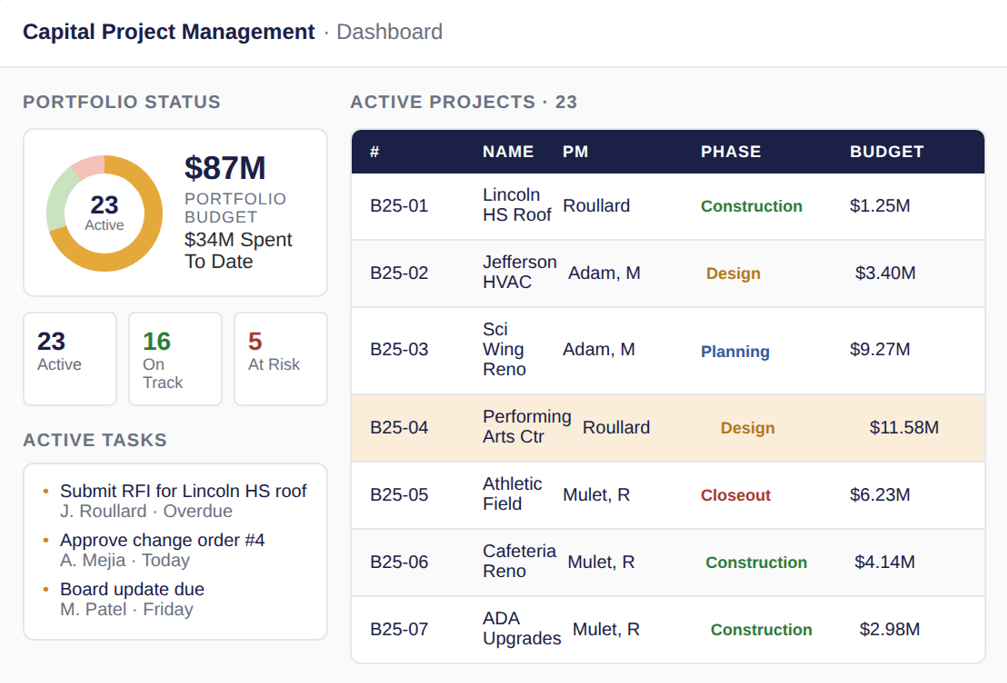
Managing capital projects across multiple locations requires a centralized view of every active project, its budget, and its timeline. The right platform gives you that portfolio-level visibility in one place.
Ask whether the platform lets you compare project performance across buildings and campuses. You need to see funding allocations, milestone progress, and risk indicators side by side. That visibility is what keeps multi-site coordination from breaking down when you run ten projects at once across different regions.
2. Connection to Asset and Condition Data
Capital priorities should reflect the real condition of your assets, not guesses or last year's inspection notes. Evaluate whether the software ties project planning directly to asset records, including equipment age, service history, and condition assessments.
That connection matters because it turns capital planning into an evidence-based process. You can rank a roof replacement against an HVAC overhaul using documented performance data. Across 40M+ square feet of managed space, we keep seeing that the teams connecting asset data to capital plans make more defensible funding decisions.
3. Drawing and Document Accuracy
Capital projects depend on accurate floor plans. Contractors need to locate utility shutoffs, fire suppression lines, and structural elements before construction starts. Outdated drawings lead to change orders and delays.
Evaluate whether the platform connects project records to verified, current drawings. Architectural field verification confirms that plans reflect real conditions. VLogic Systems keeps drawings accurate through on-site verification and a dedicated in-house drafting team, so your project data sits on reliable building records.
4. Compliance and Regulatory Tracking
Healthcare, government, and education facilities face sector-specific compliance demands during capital work. Joint Commission surveys, NFPA codes, and federal reporting requirements do not pause for a renovation.
Look for software that tracks compliance obligations alongside project milestones. Automated dashboards that flag upcoming inspections and audit deadlines reduce the administrative burden on your team. For regulated environments, compliance tracking tied to capital projects keeps your facilities audit-ready throughout construction.
5. Budget and Schedule Management Across Projects
Running multiple capital projects at once means tracking contracts, change orders, invoices, and timelines for each one. A single missed change order can cascade across your budget for the fiscal year.
The right platform consolidates financial data across all active projects and surfaces variances early. You need alerts that flag overruns before they escalate. For multi-site teams, this financial visibility is the difference between a controlled capital program and one that is constantly catching up.
6. Integration with Existing Facility Systems
Capital project software that stands alone creates a data silo. Evaluate how the platform connects to your Integrated Workplace Management System, ERP, HR databases, and maintenance management software.
Integration keeps your capital plan connected to the systems your team already uses. VLogic Systems integrates with enterprise financial systems including Oracle, PeopleSoft, Lawson, and SAP, ensuring project data flows into the same platform where you manage space, assets, and maintenance records.
7. Mobile Access for Field Teams
Project managers and technicians are rarely at a desk during capital work. They walk job sites, meet contractors, and verify conditions in the field. The platform needs to meet them where the work happens.
Evaluate whether the software offers mobile access that lets teams update project status, capture photos, and review documents from any device. Field-ready mobile functionality reduces the lag between what happens on site and what shows up in your project records.
8. Reporting for Stakeholders and Leadership
Facilities leaders report to CFOs, boards, and government funders who need clear capital project data. Your software should produce reports that answer their questions without custom queries or manual assembly.
Look for customizable dashboards and pre-built report templates that cover budget status, schedule adherence, and project risk. Strong reporting builds confidence with stakeholders and keeps capital funding flowing for future projects across your building portfolio.
9. Implementation Speed and Support Model
A platform that takes a year to deploy cannot help you with this year's capital projects. Evaluate the vendor's implementation timeline and whether they use an in-house team or outsource the work.
VLogic Systems deploys in weeks using a dedicated in-house implementation team. That approach gives you faster time to value and direct access to the people configuring your system. Across hundreds of implementations in government, healthcare, and education, that model consistently shortens the path from contract to go-live.
10. Security and Authorization Standards
Government agencies, public universities, and healthcare systems operate under strict data security requirements. A platform that does not meet those standards cannot be deployed in your environment.
VLogic Systems holds FedRAMP Authorization to Operate, meeting the federal security standards required by these sectors. A 2026 article from the American Institute of Healthcare Compliance reinforces that multi-site healthcare organizations need integrated systems with structured oversight and standardized data governance to manage compliance risk effectively. For facilities teams in regulated environments, that authorization removes a major procurement barrier.
How to Choose the Right Capital Project Platform for Your Facilities
Selecting capital project management software for multi-site facilities is a high-stakes decision. The criteria above give you a framework for evaluating options based on operational fit, not feature lists.
VLogic Systems connects capital project planning and execution to verified space, asset, and drawing data on one platform. With 25 years of experience managing over 40 million square feet across healthcare, education, and government facilities, the operational patterns are field-tested.
The right evaluation today is what keeps your capital program reliable and defensible for years of building work ahead.
FAQs about Key Factors in Capital Project Software for Facilities
What is capital project management software for facilities?
Capital project management software helps facilities teams plan, fund, and execute large building projects. VLogic Systems combines project tracking with space, asset, and drawing management in a single platform designed for multi-site operations.
Why do multi-site teams need specialized capital project software?
Generic project tools do not connect to your buildings, assets, or compliance requirements. Facilities-specific software ties capital work to real building data, so priorities reflect actual conditions across every location in your portfolio.
How does drawing accuracy affect capital project outcomes?
Contractors working from outdated floor plans encounter unexpected conditions that cause change orders and delays. Field-verified drawings give your project teams accurate building data from day one, reducing rework and keeping timelines on track.
What compliance features should healthcare facilities look for?
Look for automated tracking of Joint Commission, NFPA, and CMS requirements alongside project milestones. VLogic Systems includes compliance dashboards that keep audit documentation current throughout renovations and construction projects.
Can capital project software integrate with ERP and financial systems?
The right platform connects to your existing ERP, HR, and financial systems. VLogic Systems integrates with Oracle, PeopleSoft, Lawson, and SAP, keeping project financial data synchronized with enterprise records.
How quickly can a facilities team implement capital project software?
Implementation timelines vary by vendor. VLogic Systems deploys in weeks using an in-house team, giving facilities teams faster access to project tracking, reporting, and capital coordination across sites.

Leave a Reply